
All in the Family: Cabin Crisis
A cabin can be a breeding ground for a family feud. It’s important to plan how to pass it down through generations.
original article published in the Minnesota Star Tribune by KARA MCGUIRE
http://www.startribune.com/lifestyle/yourmoney/55459457.html
Bea Anderson and her siblings have always made decisions about their shared cabin with a handshake. With just a brother and a sister and their spouses to consult, that hasn’t so hard. But the cabin on Lake Vermillion, which has been in the family for more than 50 years, will pass to seven families in the next generation. “When there’s more people involved, then you get more opinions. We wanted to set up guidelines about how we feel the cabin can be run successfully,” Bea’s husband, Jerry Anderson, said. They needed a plan and turned to a cabin trust. Without a trust, cabins are often passed to the next generation in equal shares, with equal responsibility for the expenses and upkeep. That arrangement is known as tenants-in-common. No problem, right?
But what if the new generation of owners can’t devise a schedule for using the cabin? What if they can’t make decisions about whether to put on a new roof or add a garage? What happens if someone wants to sell his share of the cabin? In the event of a divorce or death, does the unrelated spouse get an interest, so a share of the cabin is now owned outside of the family? And if one owner can’t afford his share and ultimately files for bankruptcy, then what?
“The solutions to those [issues], if you don’t have some mechanism to deal with them, is a court proceeding. And as you can imagine, kids don’t get long so well after you serve them papers,” said Joel Mullen, a Bloomington attorney who specializes in cabin trusts. A trust lays out how a cabin is to be owned, cared for, paid for and used once the current owners pass away. It also addresses who will be the trustee. Typically, one or more of the children are selected, but sometimes a neutral third party, such as a bank without an interest in the cabin, is selected. To get some additional information you should read this.
In the case of Bea’s family cabin, the current owners gave the future owners some time to think about whether they wanted to own art of the cabin. Jerry Anderson wasn’t surprised when everyone said they wanted in. The cabin is built on land Bea’s father, who was a miner in Soudan, Minn., bought from the mining company. “It is really special,” he said. In the event that someone says “no thanks,” families typically use other assets from the estate to buy that person’s share of the cabin.
Family wishes
Working with St. Paul attorney Frank Heers, the family created a rotation to ensure one family doesn’t get all the good holidays. They also came up with rules about how to spend money to maintain the property. Large projects that would cost thousands, like putting on a new roof or building an addition, for example, require 100 percent agreement, while with most smaller projects, the majority rules.
Most important, they agreed upon rules outlining one of the most contentious cabin issues: What happens if one family wants to sell its share? Attorneys recommend that after determining fair market value, the family wanting out sells its share to the other owners at a discount.
Without [the discount], it doesn’t really give a financial incentive to your brother or sister to buy you out. So we create that,” Mullen said. Payments could be spread out over several years so the sale wouldn’t strain the remaining owners’ finances. In addition to a cabin trust, cabin owners might also consider a limited liability corporation or limited liability partnership. Heers uses an LLC when someone out of state owns an interest in a Minnesota cabin.
He also considers it if multiple families own a cabin or the property is being rented out. LLCs can do a better job to limit the liability of the cabin owners in the event that a visitor is injured at the property and then sues. LLCs can also last forever. If those options seem like overkill, tenants-in-common should at least create a tenancy agreement, which Heers describes as “a contract between co-tenants to use the property a certain way.”
But he doesn’t create many tenancy agreements because major ownership issues, such as what happens to the property in the event of a divorce or bankruptcy, aren’t easily addressed. Ideally, estate planning attorneys say that a cabin trust would go hand-in-hand with the rest of an estate plan, especially if estate taxes are an issue.
According to the attorneys I spoke with, a cabin trust or LLC will cost you anywhere from $1,500 to $4,000. Some attorneys who usually work on a flat-fee basis may charge by the hour because creating a cabin estate plan can be messy. But the expense and hassle are likely cheaper than a mediation between several owners who have no rules to abide by and can’t come to an agreement. A tenants-in-common agreement should cost less than $1,000.
Whether a family goes with a tenants-incommon agreement, a cabin trust or an LLC, there is one advantage that comes with all of the options: Families discuss their wishes. Sometimes, the current owners just assume the younger generation wants to keep the cabin in the family when, in fact, the kids can’t wait to sell it. Other times, parents assume children who grumble about making it to the family lake house will want to unload it.
But the children have visions of spending lazy summers fishing with their kids. “Having that honest conversation really helps,” Mullen said. Easier said than done, right? Here are resources to consider. Peter McClellan had many clients who insisted their kids wouldn’t fight when they died. “Then they pass away and it’s World War III,” said McClellan, president of the 401k Latte Co. in Lakeville. So he compiled a book of inheritance stories called “Cabinosity” with the hopes that it would get families to start talking before it’s too late.
Another resource that deals with inheritance without squabbles is the University of Minnesota Extension Service’s “Who Gets Grandma’s Yellow Pie Plate?” A lot of that material is available at www.yellowpieplate.umn.edu.
Kara McGuire, Minneapolis Star Tribune • 612-673-7293.
Creating a Cabin Trust After the Family Cabin has Passed to the Adult Children

I shouldn’t be surprised by the fact that I get a number of requests to create a Cabin Trust for a family after the cabin has passed to the next generation. Only then do the children realize that this asset of their inheritance was more of a problem than a gift.
They finally get it- that the problems associated with multiple ownership of a family cabin are unworkable for virtually every family (absent planning for it of course!). When one or more of the owners visits my office to discuss what a Cabin Trust can do for their family, they often look exhausted.
I can tell by looking at them they have been through the ringer. They often say, “I wish Mom and Dad had sold the cabin instead”. Their stories are sadly all the same.
One child wants to be bought out and the others can’t or won’t buy them out. Or one child uses the cabin more than the others but fails to pay their share of the expenses. Or one child is sick and tired of doing all of the work for his siblings to enjoy.
The stories are endless and sadly, almost always the same. They will tell you how close they all used to be and that their relationships will never recover.
Although I preach about the benefits of planning for multiple ownership of a family cabin before it passes to the next generation, planning after the fact can help repair strained family relationships. However, helping a family in a “shared cabin crisis” is not a picnic for the attorney.
The feelings of injustice and betrayal and distrust are hard to heal. It makes drafting an agreement difficult or almost impossible. However, if all of the family members can finally admit that this is a problem they cannot solve on their own, that is the point that much of the healing begins.
Do Trust and Estate Attorneys Owe Family Cabin Owners an Apology?
Estate planning can be complicated. Knowing this, I have always believed it was important to break down the process so my clients have a clear understanding of what we are trying to accomplish in drafting and implementing an effective estate plan.
For the past few years, I have explained to clients that whether a family is worth $5000.00 or $50,000,000.00 the objectives with any estate plan are the same. These objectives are:
1) Avoid probate (if desired)
2) Pass assets to the next generation or charity
3) Plan for incapacity
4) Avoid or reduce estate taxes to the extent desired or possible
If we accomplish these four tasks most estate planning attorneys view their job as complete.
Now, every estate attorney has their own definition of what they are trying to accomplish, but again, it is my view that these four elements help my clients understand the process.
In dealing with my clients who own a family cabin, it quickly became evident that one essential element was missing. What is that element? Preserving family relationships after a loved one passes. Since this 5th element of estate planning has been missing, I believe the estate planning community, me included, owes family cabin owners an apology.
For years, too few of us have taken seriously our role as counselors as well as attorneys. We all know “that family” who fought over mom’s soup spoon or dad’s grandfather clock and I am not apologizing for that. Even the best estate plan does not account for childishness. However, there are certain family assets, a cabin among them, in which we should have recognized the potential for family conflict but did nothing to prevent it. Don`t forget to look into this website to find additional info.
The family cabin is special and should not be treated like every other family asset. It is amazing to me that business succession plans have recognized and dealt with family conflict for years but estate attorneys, by and large, have not recognized that multiple ownership of a cabin presents the same problems for families as passing down a family business.
Just like a family business, a cabin is fraught with potential conflict over
- taxes
- expenses
- equity
- and buy-out provisions.
Yet the vast majority of estate attorneys have treated the family cabin just like any other family asset. The truth is, the family cabin is not like any other asset. It must be dealt with not only to avoid conflict after a loved one passes, but also to allow the cabin to be used and enjoyed for the purpose our clients intend.
The family cabin can be a great source of joy for the average American family but if estate attorneys continue to treat it like any other family asset they invite the kind of conflict that families cannot mend.
Incorporating a simple cabin trust can avoid the conflict we as planners should anticipate. The whole point of any estate plan is to make it easier for families to deal with the passing of a loved one. Failing to deal with it means we cause problems rather than solve them.
What If One Of My Kids Doesn’t Want to Keep the Cabin After We Pass?

Cabin Trusts and “Like Kind Distributions”
What can you do if one of your kids doesn’t want to keep the cabin or vacation home after you pass? First of all, when considering whether a Cabin Trust is right for any family, I always encourage my clients to simply ask the kids whether they would want to keep the cabin when the parents pass away.
If all the kids say they don’t want to keep the cabin, then there’s no need for a Cabin Trust in your Will or Trust planning.
But more often than not, one or more of the children wants to keep the cabin and one or more don’t. In these situations, we allow for all the children to opt-in or out of the Cabin Trust at the time the parents pass away.
Typically, a time is set in the Will or Trust itself when the children can elect to be in or out of the trust. For those children who decide to opt out, we can compensate them with other estate assets.
This is called a “like kind distribution” and it works as follows:
Imagine that a family has an estate plan which includes a trust for the cabin or vacation home. The Cabin Trust lays out the parameters of the cabin’s use, equity, taxes, expenses, maintenance, and buy-out provisions.
The estate plan also has an option for each child to consider and that is-
Do I want to elect to be a part of the cabin or not?
If a child decides within the timeframe allowed (generally six months after the surviving parent passes) to opt-out of the cabin, that child receives what would have been their share of the fair market value of the cabin in other assets.
Let’s look at a ‘real world’ example:
So, in this example, we assume there are four children and the cabin is worth $400,000.00.
If one child opts-out of the cabin trust, then they may receive the equivalent value of their share in other assets such as retirement accounts or proceeds from the sale of the family home. This “like kind distribution” ensures each child gets an equal inheritance but doesn’t force children who would prefer not to be a part of the cabin trust to share ownership with their siblings.
Again, the goal of every estate plan should not stop at the successful transfer of assets to the next generation. Rather it should also be about preserving family relationships after a loved one passes. The like kind distribution approach is just one of many ways we accomplish this goal when a family cabin or vacation home is part of your estate.
Cabin Owners With Adult Kids – It’s time to act as the parent one more time!

Have you ever heard that the only normal family is a family that you don’t know very well? Well as a trust and estate attorney, I can tell you that no truer words have ever been spoken.
I have helped families from all sorts of differing backgrounds prepare their estate plan, and I have learned that it takes some prodding to discover if any underlying issues might complicate the estate. However, even for the so-called “perfect family,” there’s one question I always have to ask. In addition, you can learn useful information over here.
Do you own a family cabin or vacation home?
Why? Because I know this can potentially be a huge problem for the family if a loved one passes. If the answer is yes, I know we have a problem to solve and the family doesn’t even realize what a huge problem it is.
If you have read my earlier blog posts you will know that this is a problem for any family that owns a cabin. Why? Because if the cabin is left to the children, you have an unmanageable situation left for the children to deal with.
• Who gets to use the cabin and when?
• What if some children want to sell while the others don’t?
• Who will winterize the cabin and maintain the dock, etc?
All of these problems will be magnified when the parents are gone. Therefore it is essential to deal with the issue of the cabin now to preserve family relationships after the parents have passed.
The simple solution to this problem is to incorporate a Cabin Trust or LLC into your estate plan. The Cabin Trust lays out the important parameters:
• Use
• Equity
• Taxes
• Expenses
• Upkeep
• Buy out provisions
This eliminates many of the disagreements and FIGHTS that the children are bound to have in its absence.
However, with each foreseeable problem that a cabin can create for the kids, the solutions are varied and specific to each family.
One of the big mistakes my adult clients make after they decide to incorporate a cabin trust into their estate plan is to get each child’s input on each decision. If they do this, they will soon discover why the cabin trust is so important. The kids will disagree about many of the issues needed to be resolved.
I have learned through some painful lessons that the parents need to act as the parents once again and make the decisions that they believe are the best fit for all of their children.
Every family will have one child that is more vocal than the others and often the parents side with this child over the others because as we all know, the squeaky wheel does get the grease. However, it is often the case that the louder child isn’t always the one with the most equitable ideas.
When it comes to the “care & feeding” of the family cabin or vacation home, most of the time it is still the parents that:
• pay the bills
• winterize the cabin
• maintain the docks
• keep a schedule for cabin use
Once the parents have passed, these duties fall to the kids. Depending on how well your children work together, this can make things extremely difficult. Especially if one or more children wants to sell the cabin or vacation home at some point. Now, without a cabin trust, you have a family fight in the making that could last for years.
Therefore, the parents must decide how the cabin trust for their family cabin or vacation home will work. And with the help and guidance of a trust and estate attorney who is experienced in drafting cabin trusts (see How to Choose the Right Cabin Trust Attorney) the parents can deal with these issues now and save and even strengthen their children’s ongoing relationships after the parents have passed.
How To Choose The Right Cabin Trust Attorney

Choosing the right cabin trust attorney to draft and execute a cabin trust for your family’s cabin can have repercussions in your family for decades to come. Consider this: most attorneys, including the vast majority of estate planning attorneys, have never drafted a single cabin trust.
Most attorneys that specialize in estate planning are concerned primarily with the efficient transfer of your assets to the next generation. There is nothing wrong with this focus. That is what the majority of our clients pay us to do.
However, in my opinion, trust and estate attorneys often miss what I think should be the vocation of any estate attorney: to preserve family relationships AFTER your assets pass to the next generation.
What do I mean? Any skilled estate attorney can efficiently plan to pass your assets to the next generation while minimizing estate taxes and eliminating the need to probate the estate. However, not enough of us ask the most important question. How will their kids relate to each other after the parents are gone?
Now, let’s consider the family cabin as it relates to this question. An estate attorney concerned primarily with the efficient transfer of your assets to the next generation will view the cabin in the same manner as they view all other assets.
In most cases, the attorney will draft a plan that leaves all assets you own to the next generation in equal shares. And without further consideration or counsel, the client will see their wishes fulfilled.
The client wanted to minimize estate taxes, avoid probate, and have an equal distribution of their assets to the children. For the average estate attorney, he/she will view their job as complete and the client walks away happy. Or so they think…
The client will never know of the disaster that awaits the family as a result of this plan. In this plan, all assets were passed to the children in equal shares and for most assets this is a fine distribution scheme. However, when a family cabin is involved, it is the rule and not the exception that the children’s relationships will be forever changed.
The family cabin is a special, almost sacred place for a family. And leaving this special asset to the children as equal owners will cause serious rifts among the children left behind. The arguments WILL start shortly after the parents pass away.
Typically, one child who doesn’t use the cabin as often as the others will propose a sale. The children who do still use the cabin will protest and the first of many fights will begin. And I must warn you that these are not small fights. These are the fights that last a lifetime. Don’t believe me? Let me prove it to you with the following story:
Let’s say for example that the family cabin is left to three adult children in equal shares, just as the parents wanted (or at least thought they wanted). The oldest child, we will call him Joe, has always loved the cabin and Joe spends most weekends there, fishing with his family. He is very grateful his parents left his family this wonderful legacy.
The middle son, Rob, also loves the cabin and would use it more frequently but there is a problem. Joe is at the cabin virtually every weekend and although Joe invites Rob and his wife and kids to join him up there, the truth is, Rob’s wife doesn’t care for Joe and his wife.
They get along in social settings but the idea of spending an entire weekend with them is an exhausting proposition for Rob’s wife. Rob’s wife is no shrinking violet either and pressures Rob to tell his brother that it is only fair that they be able to use the cabin alone.
Rob after weeks of agonizing, finally asks Joe if he would reserve a few weeks for his family and not visit the cabin those weeks. Joe is really hurt by this.
Forget for a moment whether he should be or not, the truth is Joe thought that mom and dad would want the kids to enjoy the cabin together. After all, that is what they did as kids and moreover, that must have been the reason mom and dad left the cabin to all of them.
Joe tells Rob that he will continue to use the cabin as he wishes and hopes that Rob and his family will join them. Rob is furious and worries what his wife is going to think, or worse, tell Joe what she thinks.
Joe and Rob’s sister Lucy, who lives in Seattle with her husband, have intended to go to the cabin but really can’t get away. They have been having a number of discussions lately about their finances and things are not looking great. They know that cabin is worth $600K and they could really use the money.
They ask Joe and Rob to consider buying her out. However, Rob and Joe tell her it is impossible. They can’t afford to do that. They remind her that no one told her to move to Seattle and she is welcome to visit the cabin any time and she should send a check for her share of the taxes as soon as possible because they are past due.
Lucy is angry and upset. She feels that her parents left the cabin to all of them, but the truth is only her brothers get to use it and she can’t even get her share of the inheritance out of the cabin. Moreover, she feels as though she is subsidizing their inheritance. It just doesn’t seem right.
Now, let me ask you…who is the bad guy here? Is it Joe, Rob and his wife, or even Lucy? This is, of course, a rhetorical question because, as you can see, there are no bad guys in this story.
Joe is using the cabin the way his parents intended. Rob and his wife should be able to enjoy the cabin too. And Lucy feels cheated. Can something like this be resolved?
You should know this is not a fictional story. It is a real life example of an estate plan that appeared to accomplish the client’s goals but, in reality, went very wrong. It went wrong because the attorney did not consider the future family consequences of the plan.
If the attorney was concerned about the children’s ongoing relationships, would he/she have proposed this plan? The truth is, if the parents were correctly counseled as to the consequences of this plan, they would have come to the conclusion that no asset, including the family cabin, is worth the children fighting over.
This problem could have been easily prevented. They should have either forced the sale of the cabin through the parents Wills or drafted a Cabin Trust or LLC that lays out the parameters of the cabin’s use, equity, taxes, expenses, and buy-out provisions.
If it is truly important to the parents that the cabin be shared by the children, then the estate attorney must work with the parents to craft the right estate plan. They need an estate plan that not only efficiently transfers their assets to the next generation, but preserves and even strengthens their children’s ongoing relationships.
Why is leaving the family cabin to my kids a problem?
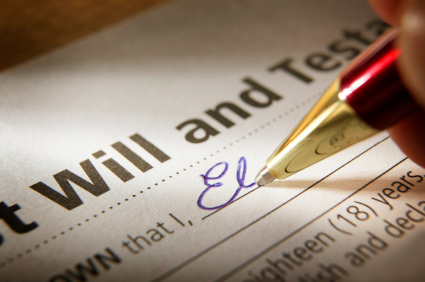
In most circumstances, we want to treat our kids equally when it comes to our estate plan. And with most assets this is not a problem. Cash, securities, qualified plans, even the family home can all be left to our adult children without any fear that this distribution will cause a problem for the adult children (as long as the distribution is In equal shares).
People are often surprised when I tell them that families do not fight over money when a loved one dies. They have a hard time believing me when I tell them that the fights occur over the emotional items such as family photo albums and the numerous household items that remind us of a simpler time when we were a close family living together.
Knowing that it is generally the emotional items we leave behind that cause adult children to argue when a loved one passes, it should be no surprise that the family cabin causes the greatest stress among family members.
The family cabin is a special place chock full of family memories. And the thought of selling it and dividing up the proceeds doesn’t feel right to the kids or the parents. It is the one family asset that the family wants to enjoy in perpetuity and there lies the problem. Additional necessary information you can read on this page.
The children now own a valuable piece of property together and this multiple ownership situation is destined to be a disaster for the kids without a framework to address those problems. The problems with multiple ownership of the cabin are many…
Just to name a few:
- Who gets to use it and when?
- Who is responsible for its upkeep?
- Who will put in the dock?
- Who will winterize the cabin?
- Who should pay the taxes and expenses?
- What if a child cannot pay their share?
- What if one or more children want to sell and the others do not?
These are just a few examples of why it is virtually impossible for even the best families to work these issues out without some degree of stress.
Every cabin owner who wishes to leave the family cabin to the children someday needs to know this:
It is the rule and not the exception, that your children’s relationships will suffer greatly.
Therefore, every cabin owner must choose one of the following outcomes:
- Leave the family cabin to the kids knowing your children’s relationships will never be the same.
- Force the sale of the cabin at your passing knowing that you likely have saved your children’s ongoing adult relationships.
- Put together a Cabin Trust or LLC that lays out the parameters of the cabin’s use, equity, taxes, expenses, rules and buy out provisions.
If it is your wish that your children shall have the cabin to enjoy after your passing, it is essential that you put together a framework that can accomplish your goal and may even strengthen your family’s relationships rather than destroy them.
What is a Cabin Trust for Minnesota Cabin Owners?
A cabin trust for Minnesota cabin owners is a new approach to a very old question. How do we keep the family cabin in the family?
While the idea of using a trust as a common estate planning tool is not new, the “bells and whistles” of the Minnesota Cabin Trust make it a new approach.
In the past, when I spoke to clients about passing their assets to their children, the question always arose “what about the cabin?”
Well, the answer before the Cabin Trust was to tell them that the cabin was like the family home, or stocks or bonds. In other words, it was simply another family asset and therefore, the children can decide to keep it, sell it, have one or two kids keep it and pay the other kids off with other estate assets.
However, this was an unsatisfactory answer most of the time because the cabin is not just another asset to the family. It is in many instances, the most precious family asset. The cabin is the family’s Kennebunkport! Not always in net worth, but more due to family memories.
Therefore, this is the one asset that the parents do not want the kids to liquidate and then divide up the cash. They want the cabin to continue as a family asset where their kids can continue to enjoy it with their own kids.
However, the problem lies in the fact that the kids have very different lives and expectations of the cabin’s use and often there are disagreements about selling the cabin. Even if they decide to keep the cabin, many disagreements arise over its, use, expenses, taxes etc.
All too often the cabin becomes a nightmare for the kids rather than a precious shared family asset. A cabin destroys family relationships that often never get repaired.
Therefore, the Cabin Trust helps lay out the parameters of use, equity, taxes expenses etc. If the cabin is held in a trust, the trust will have detailed rules regarding every aspect you can think of.
When properly drafted, it can continue on as a family asset and because everyone involved understands their role and responsibility so there is nothing to fight about it. It is all in the trust.
If you want a trusted expert in Minnesota cabin trusts to create your family’s “cabin constitution,” give Joel Mullen a call at 952-921-2444 or fill out the contact form and save your family cabin for future generations!
PRESS RELEASE: Cabin Trust MN
For immediate release:
New Cabin Trust keeps Minnesota kids from fighting over the family cabin when parents are gone…
MINNEAPOLIS, MN, Oct. 2 – Fighting over the family cabin after the parents are gone can devastate relationships between siblings. The Cabin Trust lays out the parameters of use including detailed rules on equity, taxes, expenses and responsibilities for the family cabin. With a properly drafted Cabin Trust, the family cabin can continue on as a family asset because everyone involved understands their role and responsibility. There is nothing left to fight about.
Wills and trusts have always treated the family cabin just like stocks or bonds. In other words, just another family asset. This leaves the children to decide between themselves to keep it, sell it, or have one or two kids keep it and pay the other kids off with other estate assets.
However, this is rarely how these situations resolve themselves. No one has an emotional attachment to 1,000 shares of General Electric. But start talking about what to do with the family cabin and the sparks start to fly. The cabin is the family’s Kennebunkport. Maybe not always in net worth, but certainly in terms of the family memories created there.
Therefore, this is the one asset that the parents usually do not want the kids to liquidate and then divide up the cash. They want the cabin to continue as a family asset where their kids can continue to enjoy it with their own kids. Unfortunately, without the proper arrangements, instead of bringing the family together as intended, the family cabin can tear a family apart after the parents are gone.
The kids often have very different lives and so very different expectations of the cabin’s use. Even if they all agree to sell the cabin, there are often disagreements. And if they decide to keep the cabin, fights can erupt over its use, expenses, taxes and who is responsible for what. All too often the cabin becomes a nightmare for the kids rather than a precious shared family asset. In these situations, a cabin destroys family relationships that often never get repaired. The Cabin Trust can keep the cabin in the family and the kids out of court.
Learn about the Cabin Trust; what it is, how it works, what’s involved, and how to use it in an existing estate plan. Attend the free Cabin Trust seminar on January 28th, 2009, by Estate Attorney Joel Mullen. The seminar is at the 8400 Building of the Normandale Lake Office Center in the lower level training room from 6:00 – 7:00pm.
For more information, please call Joel Mullen at (952) 921-2444 or complete this short form below to RSVP today: